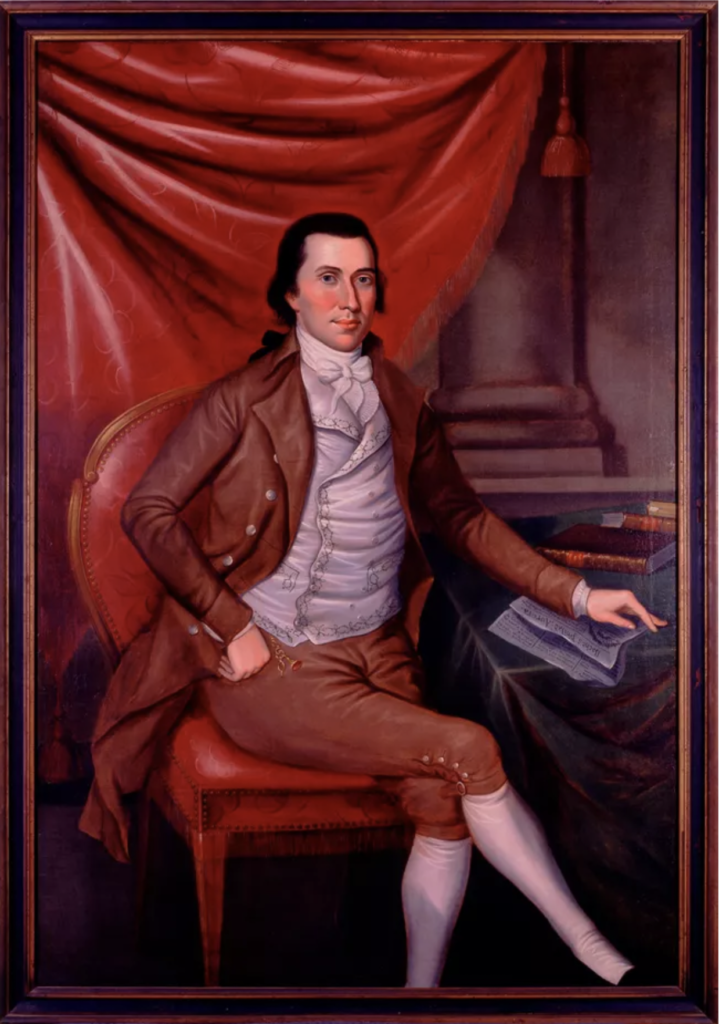
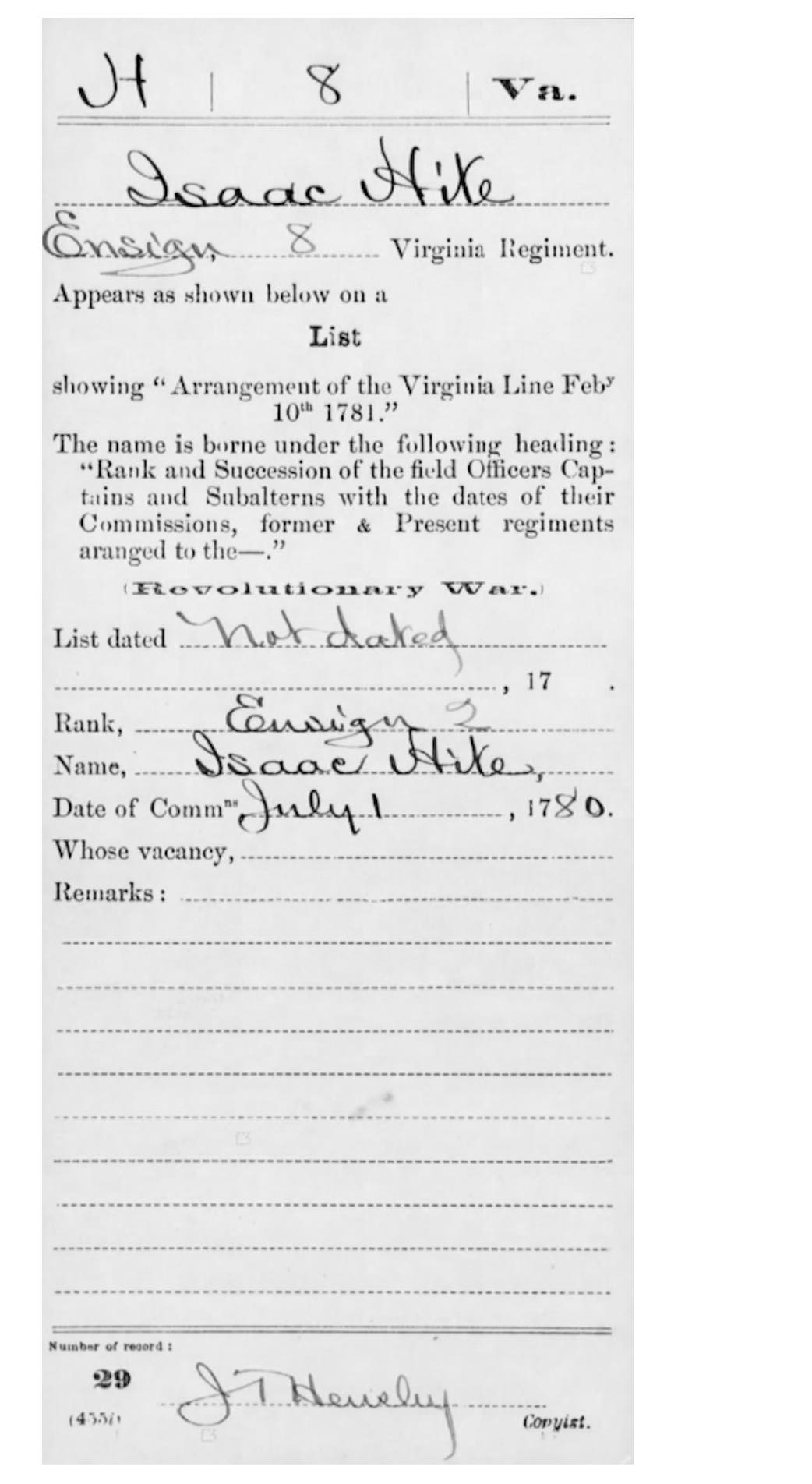
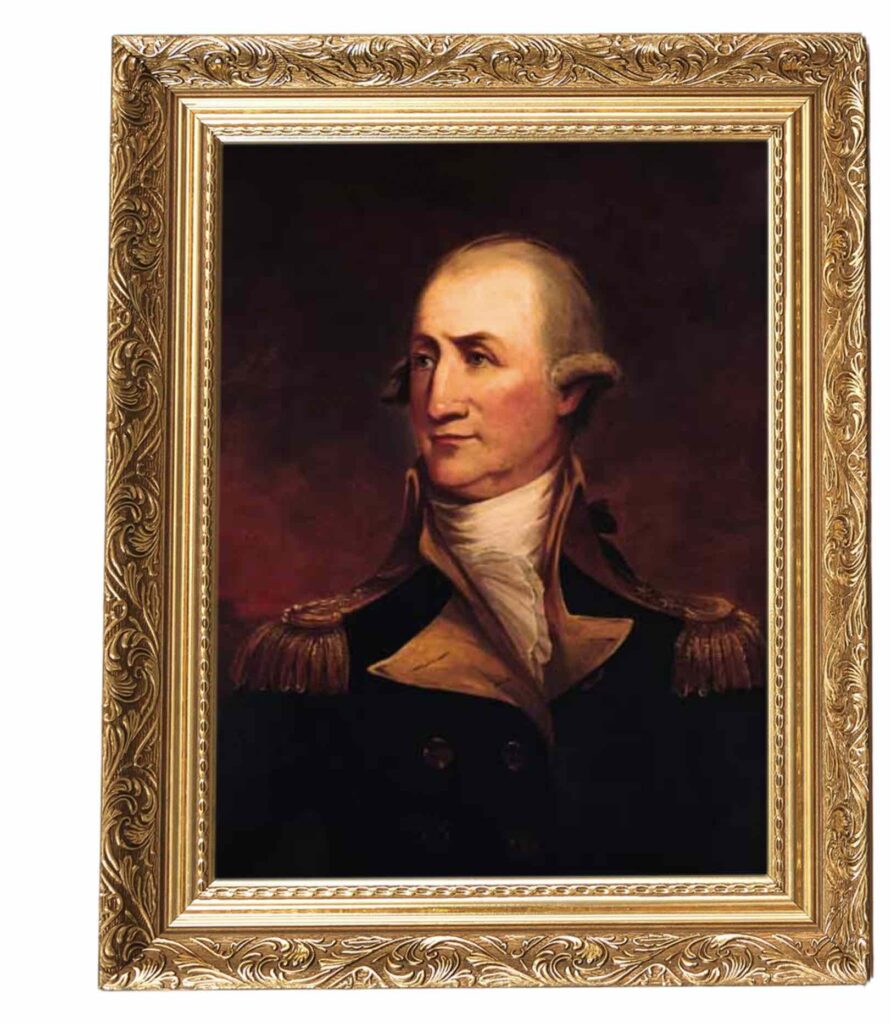
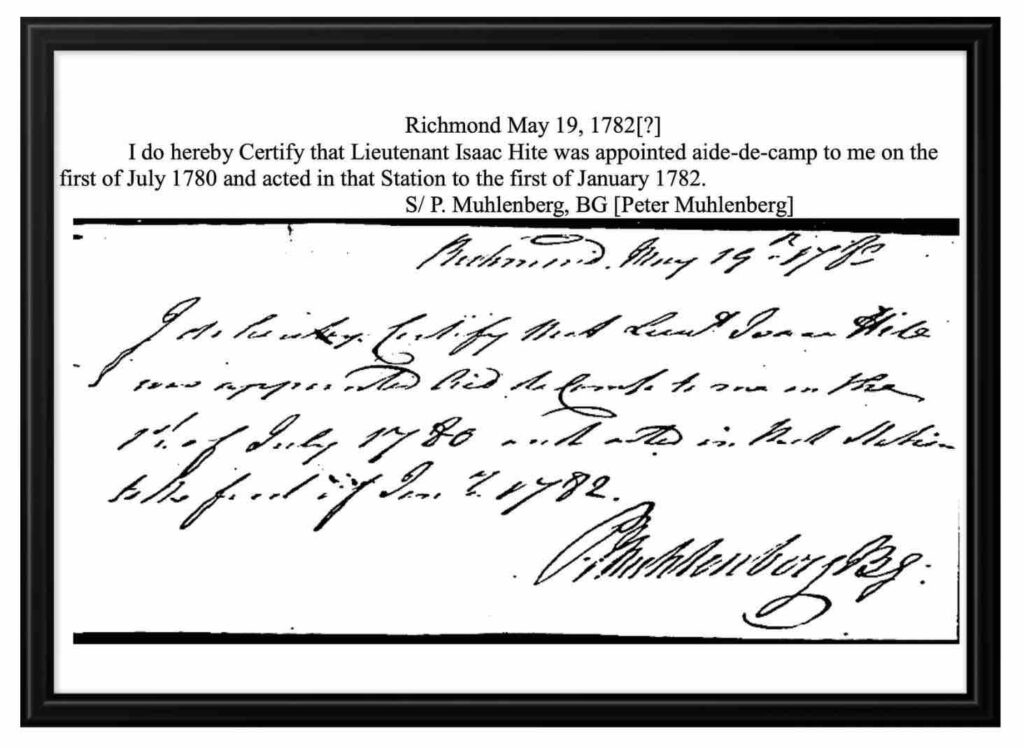
After leaving William & Mary, Isaac joined the Continental Army in Frederick County, enlisting in the Virginia Regiment and serving on the staff of General John Peter Muhlenberg, a role he held from July 1780 through the end of the war in January 1782.
By this point of the war, Muhlenberg had been promoted to Brigadier General. George Washington had sent him to Virginia primarily to assist Governor Thomas Jefferson in raising reinforcements and supplies for the Continental Army. Muhlenberg was also tasked with organizing the defense of the Commonwealth against any British attacks.
Since Brigadier Generals were allowed to choose one paid aide-de-camp, it is likely that Muhlenberg chose Isaac to serve as his from 1780 through 1782 because of the Hite family name and their connections in colonial Virginia.
While there is no historical paper trail that follows Isaac’s movements during the revolution, his duties required that he be in close proximity to General Muhlenberg, so we have a good idea of
the major events in Isaac’s military career.
In October 1780, British General Alexander Leslie landed at Portsmouth, Virginia with 2,200 troops as a diversion to help Cornwallis, who was operating in the Carolinas. In response, Muhlenberg quickly assembled a body of troops to delay the British advance toward Richmond, but because of this hastily raised, untrained and poorly armed militia, he never attacked the
British forces. However, the British fleet evacuated Leslie’s force to Charleston, South Carolina under orders from Cornwallis, leaving the impression in Virginia that the militia had successfully driven out the invasion.
Muhlenberg took the occasion for a brief furlough at home. Since he was from Woodstock, Virginia, it is possible that Isaac accompanied him to the Valley and visited his own family at Long Meadows.
Within a few days, Muhlenberg received information from Baron Friedrich von Steuben, a Prussian military officer who had taken over command in Virginia, recalling him due to the invasion of Virginia by Benedict Arnold in January 1781.
What is an aide-de-camp?
Simply put, they were junior members of a general’s staff and typically held the rank of lieutenant. An aide-de-camp’s duties were vaguely defined but included tasks like couriering orders and dispatches, assisting the general’s clerk or secretary with correspondence, and copying orders.
Although an aide-de-camp often had a more comfortable existence regarding quarters and food than the average line officer, the post also had its hazards. During battle their principal duties were to carry orders to subordinates and to observe and report on enemy movements. This frequently brought aide-de-camps into areas where there was intense fighting, putting them at severe risk.
Siege of Yorktown
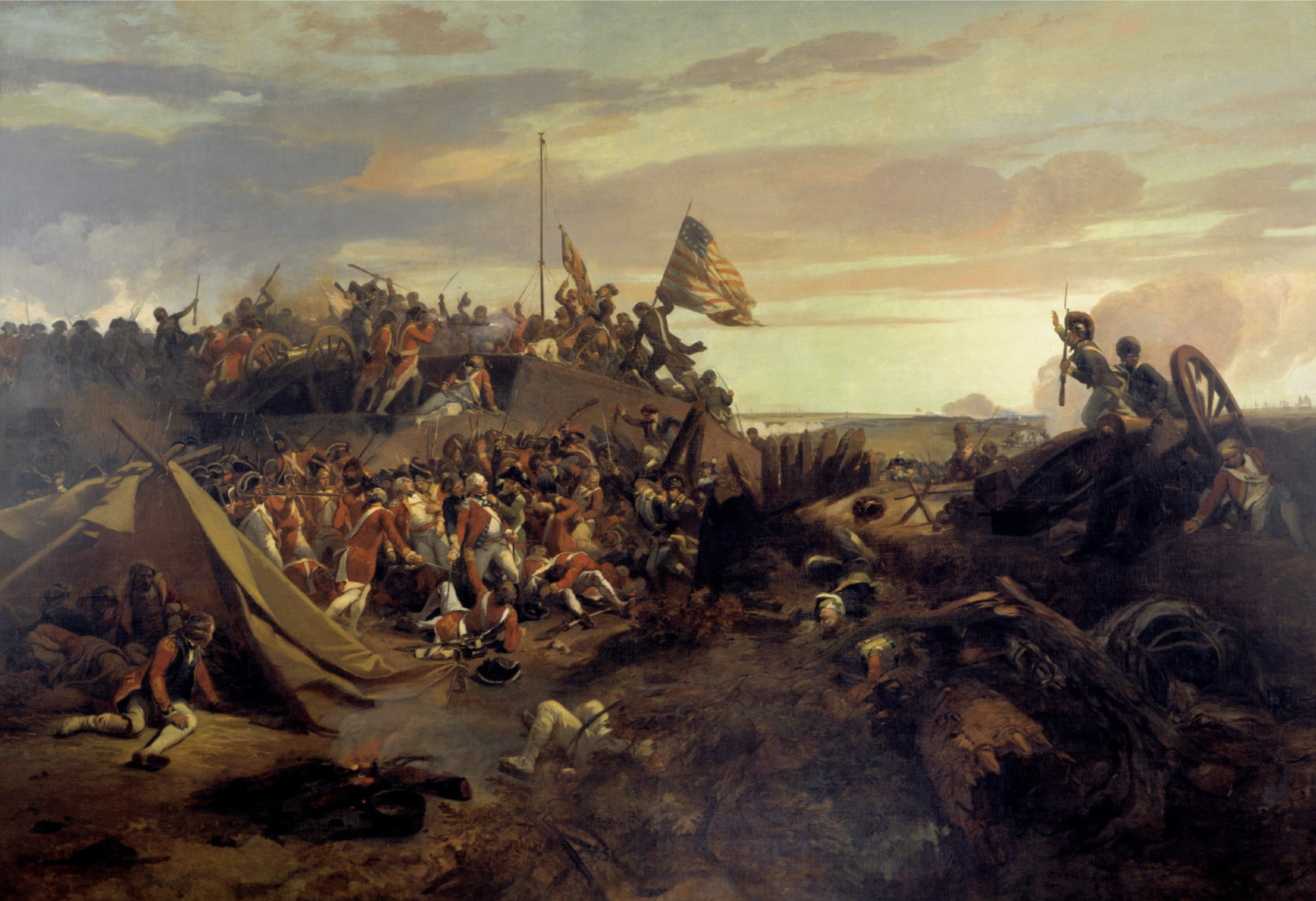
Painting by Eugène Lami, 1840. Public Domain.
Muhlenberg later commanded the 1st Brigade in Lafayette’s Light Infantry, composed of 22 New England regiments. The brigade held the American right flank and manned two crucial trenches that allowed cannon to be moved close enough to back the British in a corner.
The final assault on Redoubt Number 10 took place on the evening of October 14. Lieutenant Colonel Alexander Hamilton led one battalion, the French led a second, and Muhlenberg led a third. History often presents Hamilton as the main protagonist in the victory, but in The Life and Times of General Peter Muhlenberg, Isaac challenges that account and says that the General led the charge:
Major Isaac Heydt, lately deceased, who resided in Frederick County, Virginia, was one of General Muhlenberg’s aids during this campaign. He assured the writer1 in 1840, that General Muhlenberg, accompanied by his staff, advanced at the head of the reinforcement, and in person led the storming party. This testimony, coming from one of the few surviving actors in the scene, is valuable, and corresponding, as it does, with the official account in part, the remainder is rendered more probable.
Isaac’s account of storming the redoubt no. 10 during the Siege of Yorktown2
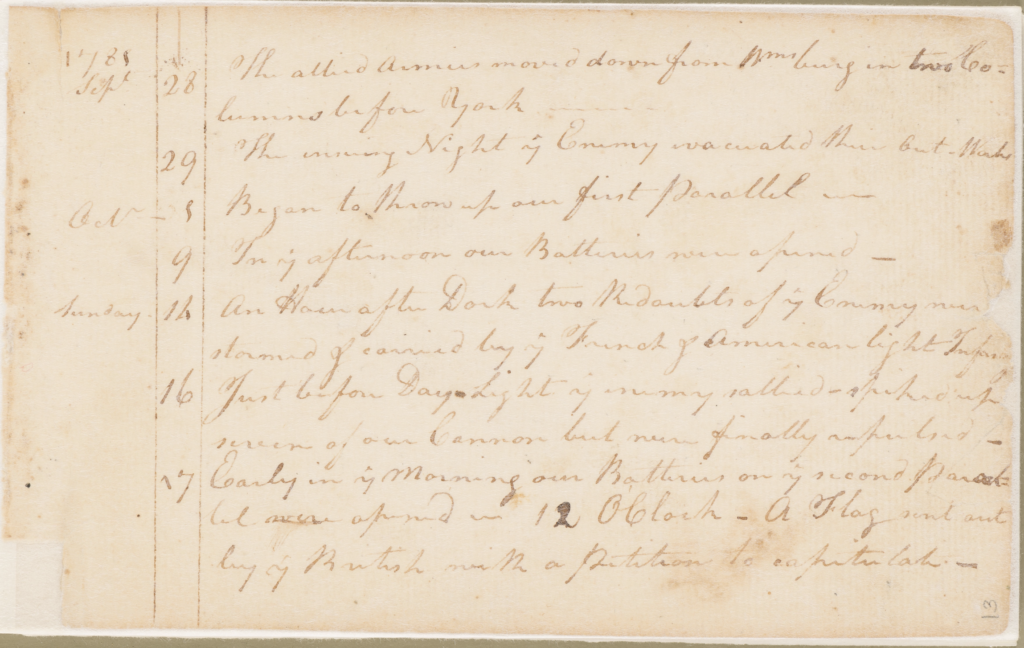
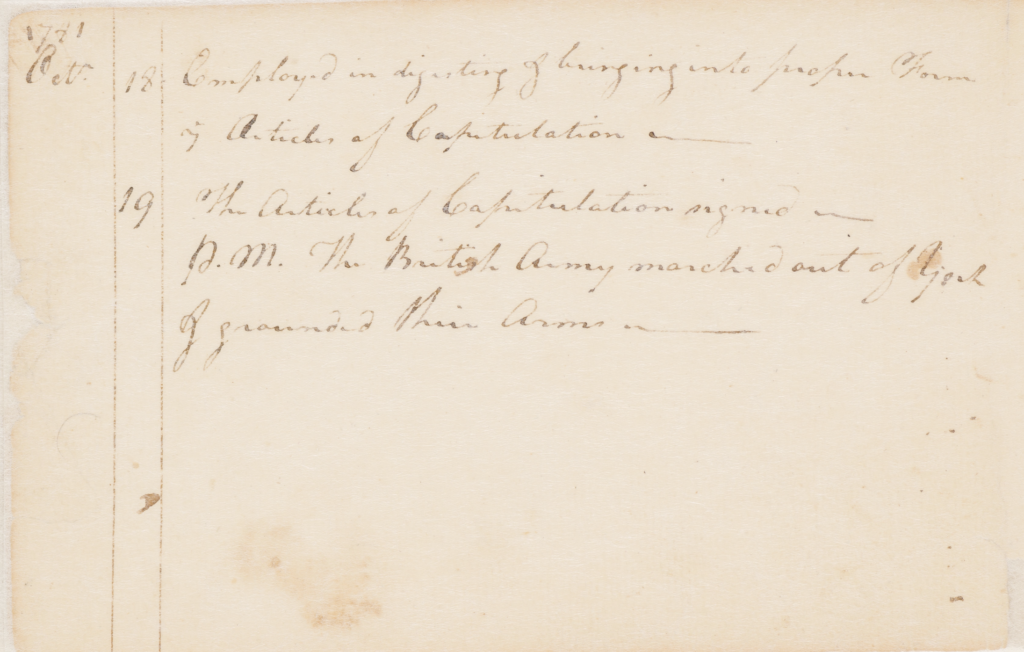
If Muhlenberg took part in the assault, Isaac may have been there as his protection detail. Isaac does not mention the experience directly, even though it would have been a remarkable and dangerous assignment. He did, however, describe the final days at Yorktown in detail:
October 14 An hour after dark 2 Redoubts of the Enemy now stormed & carried by the French & American Light Infantry
October 16 Just before Day Light the enemy rallied spiked up 7 of our Cannon but were finally repulsed
October 17 Early in the morning our Batteries on the second Parallel were opened at 12 o’clock. A flag sent out by the British with a petition to capitulate
October 18 Employed in digesting & bringing into proper form the articles of Capitulation
October 19 The articles of Capitulation signed P.M. the British Army marched out of York & grounded their arms.
After the surrender, Muhlenberg became seriously ill and returned to Woodstock. His aide-de-camp may have escorted him home and spent Christmas with the general’s family. On January 1, 1782, Lieutenant Isaac Hite was no longer serving as aide-de-camp, but his pension records indicate that he remained in service until the war ended and was discharged in November 1783.
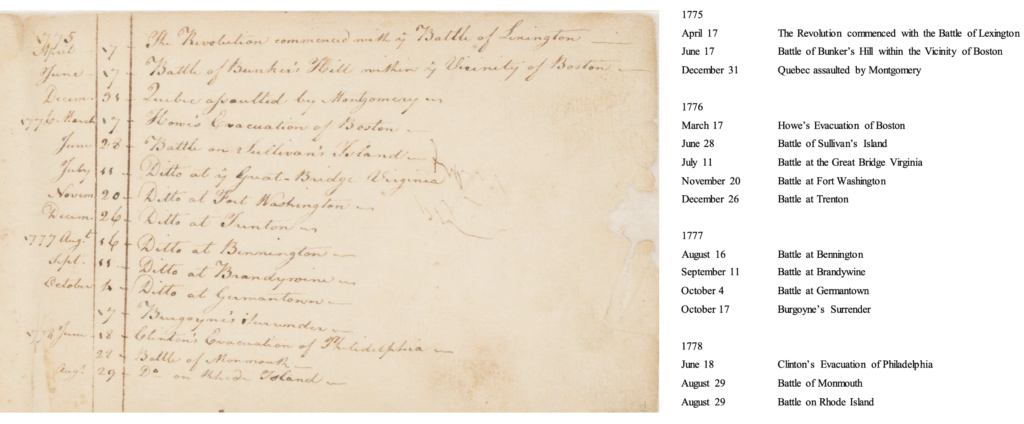
The Commonplace Book: A Wartime Log
Isaac kept what is commonly referred to as a “Commonplace Book,” which is essentially a gentleman’s journal of thoughts, copied material, and ultimately a business record of his plantation after he returned from war and began a new chapter in his life.
Originally dated 1776, Isaac wrote in this book during his tenure at William & Mary and continued to do so after he went to war. It also features a copy of the Articles of Surrender and detailed records of the number of surrendered troops and material, presumably copied during the campaign.
After the war, Isaac returned to farming and the commonplace book became a place to record plantation provisions, miscellaneous farm records, horse pedigrees, information on refining liquors, and most importantly, slave records.
- The writer is Henry Muhlenberg, General Peter Muhlenberg’s grandnephew, who visited Belle Grove and got a first-hand account from Isaac of his service in the Revolutionary War. ↩︎
- Muhlenberg, H. A. (1849). The life of Major-General Peter Muhlenberg, of the Revolutionary army. Carey and Hart. https://archive.org/details/lifeofmajorgener00muhl/page/272/mode/2up?q=isaac ↩︎