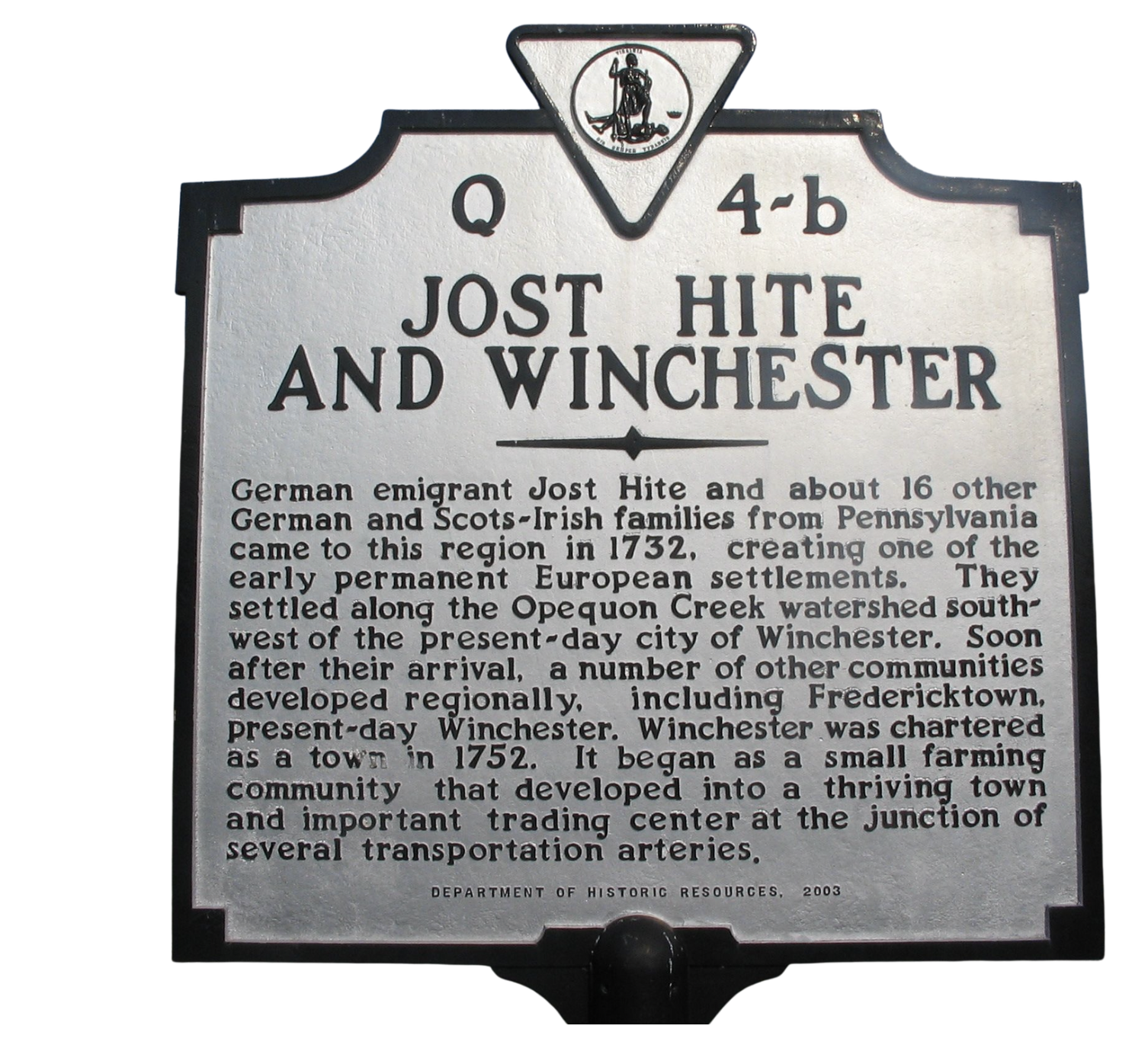
In order to understand how Major Isaac Hite Jr. became such a successful, influential figure in Frederick County, Virginia, we must first look at his family’s migration to the colonies and how his paternal grandfather, Jost Hite, took the family from German immigrants to prominent landowners.
Isaac’s grandfather, Jost Hite, was born in Germany in 1685. In 1709, Jost and his wife, Anna Maria Merkle, sailed for America and settled in central New York as part of a project to produce supplies for the British navy. He later moved to Pennsylvania, where he operated a mill.
Jost acquired 140,000 acres in the Shenandoah Valley of Virginia on the condition that he bring in settlers to occupy the land. So in 1731, he travelled with 16 other families to settle in the Valley, along with his four sons (John, Jacob, Isaac, and Abraham) as well as his three daughters and their husbands (Mary and George Bowman, Elizabeth and Paul Froman, and Magdalena and Jacob Chrisman).
Most of the families who settled with Jost in the Shenandoah Valley were of German or Scotch-Irish descent. Each family was given 1,000 acres, and so began the settlement of the Valley and the expansion of British presence in Virginia’s backcountry. Soon, Frederick Town, now known as Winchester, would grow in influence and power in the early Colonial days leading up to the American Revolution.
Long Meadow: A Family Home
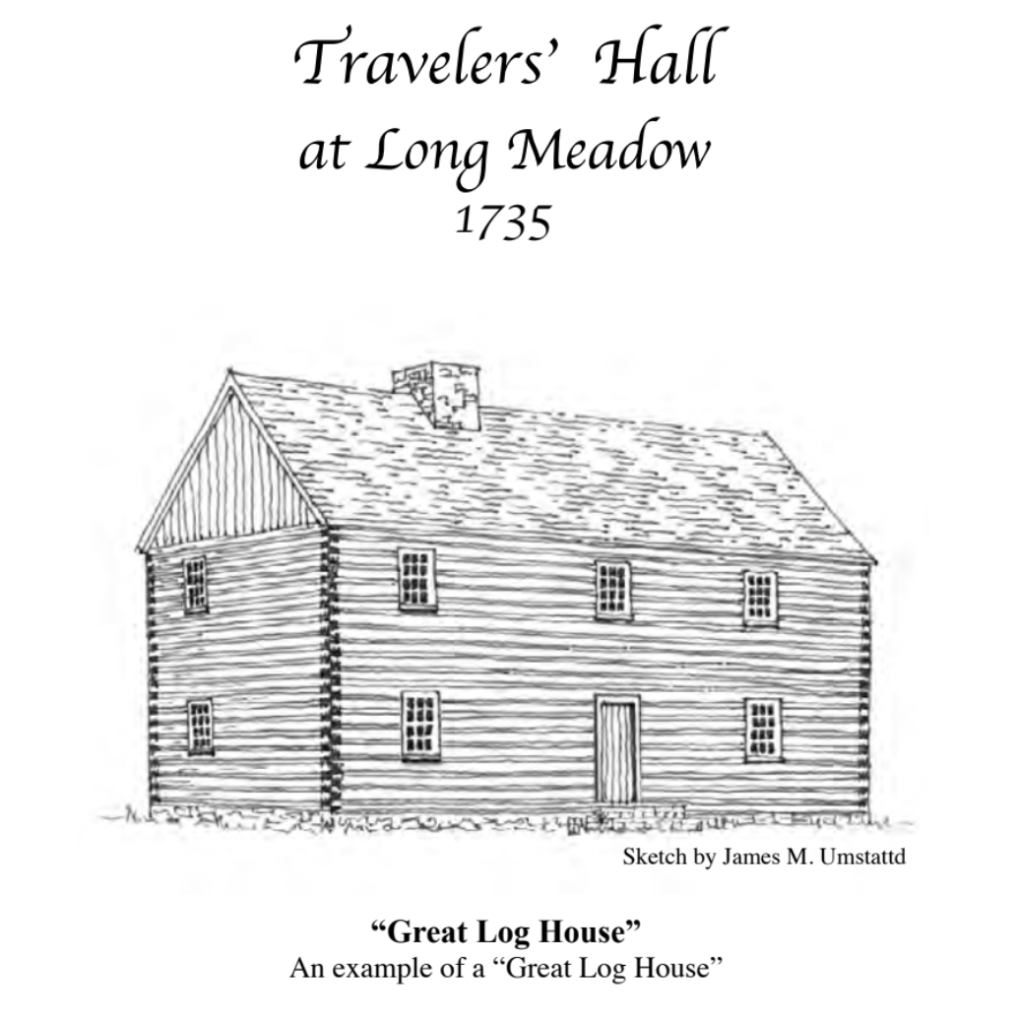
Jost set aside 900 acres on the North Fork of the Shenandoah River, which is now called Long Meadow for his son Isaac Hite Sr.
Once he reached adulthood, Isaac moved to Long Meadow and built a log cabin near Cedar Creek called “Traveler’s Hall,” strategically located between the Great Wagon Road and the Shenandoah River for access to trading. The original cabin burned sometime between 1840-1848 and is no longer standing.
Isaac Hite Sr. and his wife, Eleanor Eltinge, had five children: four daughters—Ann, Sarah, Eleanor, and Rebecca—and one son, Isaac Hite Jr., born on February 7, 1758.
Did you know?
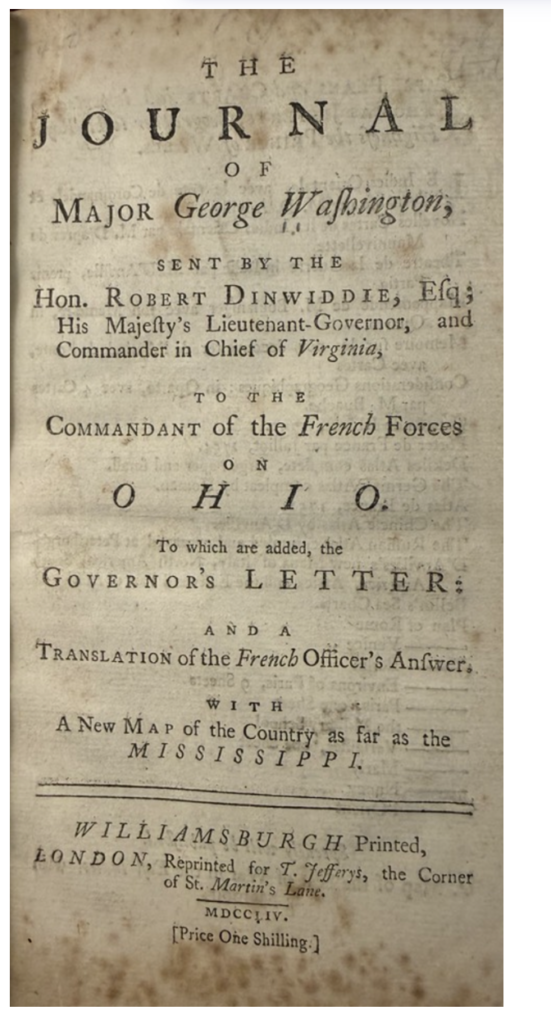
When George Washington was a young man, he started his career as a surveyor, traveling to Virginia’s backcountry, including Frederick Town, which we now call Winchester.
On March 14, 1748, he wrote a journal entry about his interaction with Jost Hite:
Monday 14th. We sent out Baggage to Capt. Hites (near Frederick Town) went ourselves down the River about 16 miles to Capt. Isaac Penningtons (the Land exceeding Rich & Fertile all the way produces abundance of Grain Hemp Tobacco &c.) in order to Lay of some Lands on Cates Marsh & Long Marsh.
George Washington, 14 March 1748